The proposed Cagayan de Oro Government Complex in Barangay Carmen is envisioned as a one-stop government hub that would make transactions more accessible and convenient for clients while reducing lengthy processing times, according to academic researchers who conducted the project’s feasibility study.
The feasibility study was conducted by City College of Cagayan de Oro President Dr. Jestoni Babia and Academic Affairs Vice President Dr. Helmae E. Tapanan.
The study results were presented during a meeting of the committee on laws and rules presided over by Councilor Edgar Cabanlas.
The presentation followed a letter from Mayor Rolando “Klarex” Uy to the Sangguniang Panlungsod urgently requesting authority to negotiate with a financial institution to fund the proposed project, amounting to ₱8.49 billion.
Babia said the proposed relocation represents a shift from the city’s fragmented government setup and its 85-year-old City Hall toward a modern, citizen-centered, and disaster-resilient government hub.
He also said the proposed City Hall transfer received 89% public approval based on a survey of 2,673 respondents from the city’s 80 barangays.
Tapanan, meanwhile, said some respondents described their transaction experience as “playing ping-pong” because of lengthy processing times and the need to visit multiple offices for a single transaction, sometimes requiring them to return on different days.
In addition to improving the transaction experience, relocating could help reduce urban congestion, provide ample parking for clients and employees, make offices more spacious, create a dedicated area for records archives, and offer flood immunity because it's in the city’s uptown area.
The study also found that maintenance and repair costs at the present City Hall location are high, which researchers said could result in savings if government offices are transferred to the proposed complex.
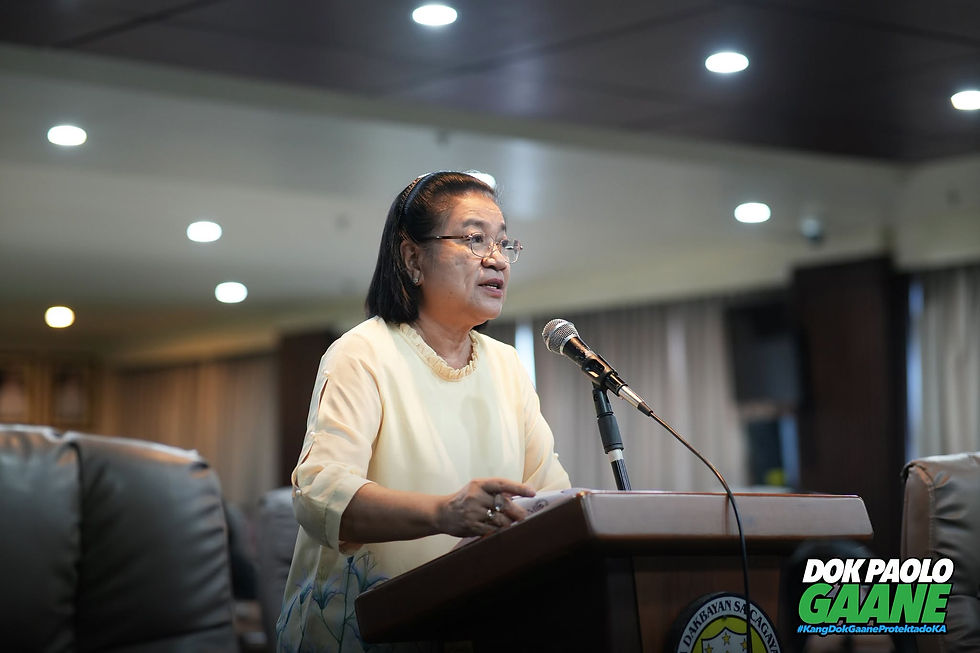
Councilor Des Dahino described the one-stop shop and reduced transaction hours as selling points for clients but also recommended improvements in technology, staffing, and accountability.
Minority Floor Leader Councilor Aga Suan asked whether the feasibility study had been reviewed by an independent body to ensure the validity of its data and findings.
In response, Babia said the researchers invited representatives from various sectors, including the Chamber of Commerce, as well as entities outside the local government, to help assess the validity and reliability of the study.
Tapanan added that several statisticians and data analysts were also invited to analyze the data.
Councilor Marlo Tabac raised concerns about the city’s capacity to meet its existing and proposed loan obligations and maintain financial reserves for unforeseen circumstances.
The researchers, together with Acting City Treasurer Joanna Marie Sanz, assured the council that the city has the capacity to meet its existing loan obligations and to address unforeseen financial needs, citing the stress test results and the increase in the city’s National Tax Allotment (NTA).
At the meeting’s conclusion, 12 majority-floor councilors voted in favor of the request, while Suan voted against it and Councilor Yvy Emano abstained. (PGU/SP)




GIHINGUSGAN ni Konsehal Roger Abaday, chairman sa komite sa public order and safety, nga pinaagi sa tabang sa nagkadaiyang ahensya sa goberno sama sa Bureau of Fire Protection (BFP), kapolisan ug sa City Disater Risk Reduction and Management Department, himoon ang regular nga pagbansay-bansay sa mga Barangay Tanod sa matag barangay sa syudad.
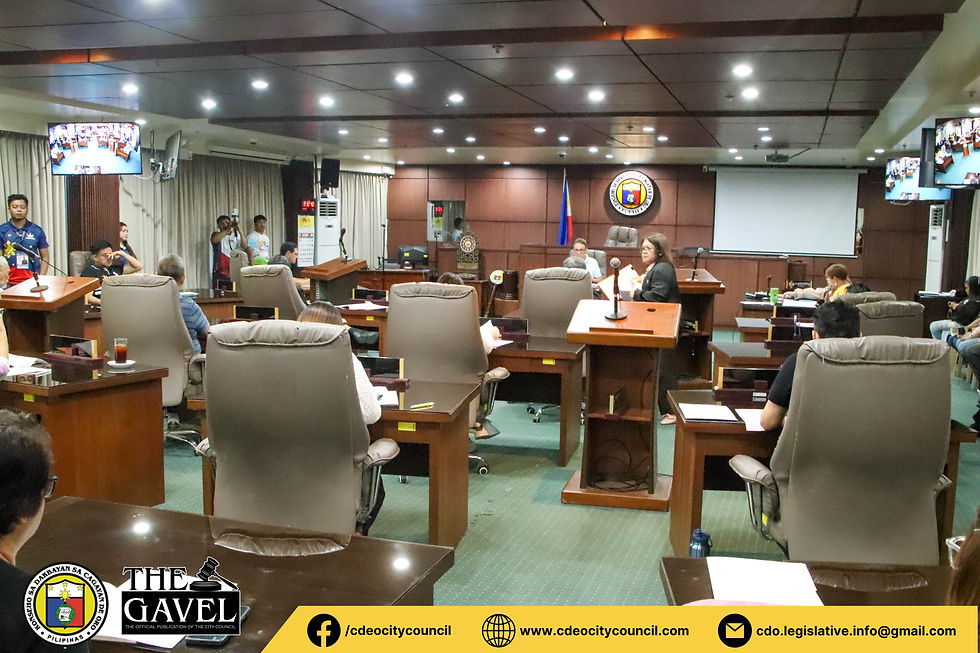
Kini ang gisugyot ni Abaday atol sa gihimong hiniusang tigom sa komite sa public order and safety, komite sa climate change ug komite sa barangay affairs, diin gihisgotan ang pagpahanas sa mga barangay tanod aron sila masayog sa angay nilang buhaton panahon sa tawag sa panginahanglan sa ilang barangay.
Dugang ni Abaday nga gawas sa mga barangay tanod, mas maayo usab nga adunay kooperasyon ug partisipasyon ang mga residente sa maong pagbansay-bansay aron daling mapakgang ang mga daotang hitabo sa dili pa mahidangat ang mga awtoridad o kabomberohan.
Nunot niini, gihangyo ni Konsehal Abaday ang mga hintungdang ahensya sa goberno nga mosumite sa ilang rekomendasyon alang sa nasangpit nga programa. (MLR/SP)

The City Council committee on health, nutrition, and health insurance, chaired by Councilor Paolo Nicolo Gaane, is recommending the establishment of a city-owned optometry clinic to be located at City Hall and the City Health Office (CHO).
During its recent meeting, the committee discussed the operational framework required to launch the facility, with a primary focus on ensuring regulatory compliance and sustainable service delivery.
The committee likewise tackled the necessity of securing a License to Operate (LTO) from the Food and Drug Administration (FDA).
As the facility plans to distribute eyeglasses and related corrective optical devices, it must be registered as a medical device distributor or retailer to function within health safety standards.
The proposed clinic is specifically designed to address early-onset vision issues of children 0-15 years old.
The committee also discussed measure to support the clinic’s accreditation under the PhilHealth Yaman ng Kalusugan (YAKAP) Program, which would help expand access to essential healthcare services for qualified beneficiaries.
Ms. Roxanne Mae Ravidas, OIC-City Health Insurance Officer, said the proposed facility will be under the Philhealth YAKAP Program to ensure its sustainability.
She said under the PhilHealth Circular 2025-002, PhilHealth optometry benefit package shall cover optometric services such as vision assessment including refraction; prescription eyeglasses including frames and lenses; and follow-up check-up.
The city plans to hire a licensed optometrist to lead the clinic’s operation, Ravidas said.
After the discussion, the committee referred the matter to the City Legal Office for its review and recommendation. (JBD/SP)